

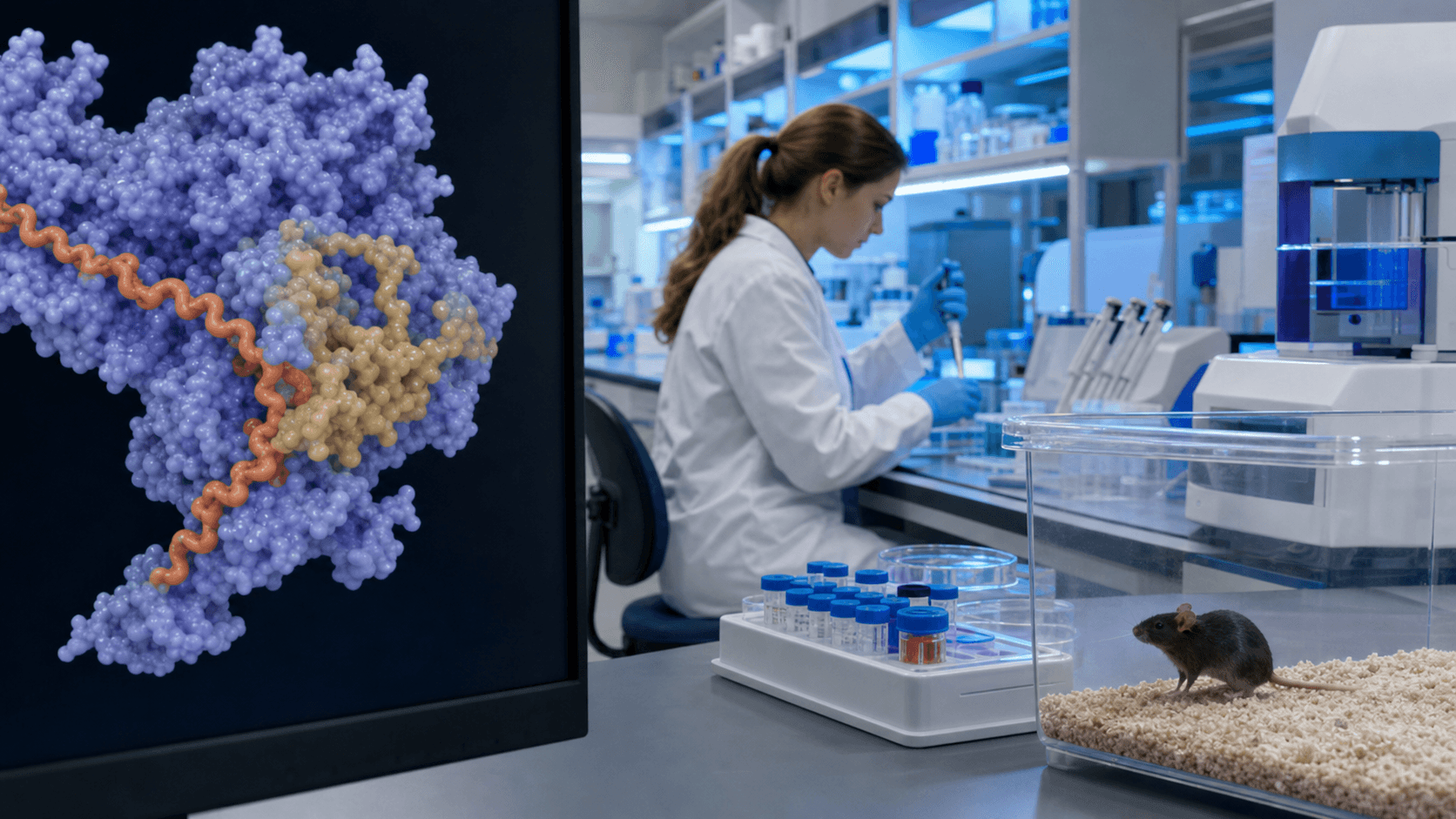
Biomedical researcher studying neurodegenerative disease in a laboratory
HelixeraFollow ALS

ALS intelligence pilot

Never miss meaningful ALS movement again.

Helixera turns fragmented Amyotrophic Lateral Sclerosis research, trial, regulatory, company, and patient-led signals into intelligence people can actually follow.

Intelligence, not medical advice.

Latest ALS intelligence

What changed, in an order people can follow.

Reviewed research, trial, regulatory, company, and community movement, connected to the original source and explained in plain language.

ResearchJul 4, 2026watch signal

Wasteosome accumulation study adds cross-disease neurodegeneration signal

A July 2026 Acta Neuropathologica Communications paper indexed in PubMed examines regional wasteosome accumulation across neurodegenerative diseases and proposes a shared mechanism related to glymphatic insufficiency.

Why it matters: Helixera can use cross-disease biology signals to connect ALS with broader neurodegenerative research themes while preserving disease-specific timelines.

Source: PubMed

Read original source


ResearchJul 4, 2026medium signal

Genetic ALS/FTD review highlights reduced penetrance as a counseling and testing issue

A July 2026 review in Amyotrophic Lateral Sclerosis and Frontotemporal Degeneration discusses reduced penetrance across genetic ALS/FTD spectrum disorders.

Why it matters: Genetics is central to several ALS research and trial paths. This belongs in Helixera as context for why genetic subgroup updates need careful, non-personalized explanation.

Source: PubMed

Read original source
ResearchJul 4, 2026watch signal

New review surveys resveratrol biology across ALS and other neurodegenerative diseases

A July 2026 Molecular Biology Reports review indexed in PubMed surveys resveratrol-related neuroprotective mechanisms across Parkinson disease, Huntington disease, ALS, and multiple sclerosis.

Why it matters: Broad mechanism reviews can help Helixera map recurring pathways across the launch disease scope, but they should be labeled as research context rather than clinical evidence.

Source: PubMed

Read original source
ResearchJul 3, 2026medium signal

PubMed indexes new TDP-43 therapeutic-targeting paper in ALS mouse models

A July 2026 Nature Aging paper indexed in PubMed reports preclinical work targeting a conserved region in the low-complexity domain of TDP-43 in ALS mouse models.

Why it matters: TDP-43 biology is a major ALS research lane. Helixera should track this as preclinical signal intelligence, while keeping clear that animal-model work is not human treatment guidance.

Source: PubMed

Read original source
ResearchJun 12, 2026medium signal

Expanded access protocol analysis adds operational lessons for tofersen access

A 2026 Muscle & Nerve article reviewed operational and resource-use insights from a tofersen expanded access protocol in ALS care settings.

Why it matters: This is useful intelligence for Helixera because it shows how complex ALS research access programs are being operationalized, without turning that information into individual care guidance.

Source: PubMed

Read original source
View 7 earlier source-linked updates
RegulatoryApr 28, 2026watch signal

openFDA adverse-event feed provides Qalsody monitoring context

The openFDA adverse-event endpoint for Qalsody includes dated report-count data and carries an explicit warning not to rely on the feed for medical-care decisions.

Why it matters: This is useful as source-monitoring infrastructure context: Helixera can watch public safety-signal feeds while clearly presenting them as unvalidated surveillance data, not medical advice.

Source: openFDA

Read original source
Clinical TrialsApr 3, 2026medium signal

TPN-101 C9ORF72 ALS/FTD phase 2a registry record is marked completed

ClinicalTrials.gov lists the TPN-101 study in C9ORF72 ALS/FTD as completed, with a last posted update on April 3, 2026 and actual enrollment of 42 participants.

Why it matters: Completed trial records are important timeline markers because they help Helixera separate active recruitment signals from studies that have moved into post-study reporting or follow-up context.

Source: ClinicalTrials.gov

Read original source
Clinical TrialsMar 30, 2026high signal

ATLAS phase 3 tofersen study remains active but not recruiting in SOD1 ALS risk population

ClinicalTrials.gov lists the ATLAS study of BIIB067, also known as tofersen, in adults with confirmed SOD1 mutations as active and not recruiting, with its record last posted as updated on March 30, 2026.

Why it matters: Trial-status changes are one of the clearest signals Helixera can monitor for families, advocates, and researchers who need to understand the ALS research landscape over time.

Source: ClinicalTrials.gov

Read original source
ResearchMar 17, 2026medium signal

VALOR proteomics paper identifies candidate tofersen response biomarkers

A 2026 Cell Reports Medicine paper used multiplexed quantitative proteomics on cerebrospinal fluid from the VALOR clinical trial to identify pharmacodynamic-response biomarker signals related to tofersen.

Why it matters: Biomarker work is a recurring ALS intelligence theme because it can shape how research teams measure biological response in trials and follow-on studies.

Source: PubMed

Read original source
Clinical TrialsMar 18, 2025high signal

ADORE oral edaravone phase 3 registry record posts results

ClinicalTrials.gov lists the ADORE study of daily oral edaravone formulation FAB122 in ALS as completed, with results first posted on March 18, 2025.

Why it matters: Trial-results postings are high-value ALS signals because they turn a registry listing into a source-linked evidence event that can be followed over time.

Source: ClinicalTrials.gov

Read original source
RegulatoryJun 14, 2024high signal

EMA Qalsody page anchors EU regulatory context for SOD1 ALS

The European Medicines Agency lists Qalsody as authorised in the European Union for adults with ALS caused by SOD1 mutation, with the medicine overview first published in June 2024.

Why it matters: Regional regulatory records help Helixera distinguish U.S. and EU milestone timelines for the same ALS therapy without implying personal suitability.

Source: European Medicines Agency

Read original source
RegulatoryApr 25, 2023high signal

FDA approval established Qalsody as a source-linked SOD1 ALS milestone

The FDA approved Qalsody, also known as tofersen, for amyotrophic lateral sclerosis associated with mutation in the SOD1 gene, with FDA content current as of April 25, 2023.

Why it matters: This regulatory milestone is a durable anchor for Helixera timelines because it connects a specific ALS subgroup, a named therapy, and an official source record.

Source: U.S. Food and Drug Administration

Read original source

Trusted ALS sources

What Helixera watches first.

Primary databases, regulators, patient-led signals, ALS-focused nonprofit research, and trusted biotech coverage, watched for context rather than care advice.

PubMed

Research literature

New indexed ALS papers and review articles.

ClinicalTrials.gov

Trial registry

New ALS studies, status changes, and recruitment movement.

FDA / openFDA

Regulatory signals

Public regulatory, label, safety, and approval-context signals.

I AM ALS

Community and policy

Patient-led advocacy, community momentum, and policy context.

BioSpace

Biotech publication

Company, funding, partnership, and pipeline coverage.

ALS Therapy Development Institute

Nonprofit research

ALS-focused research-program context and disease-specific scientific movement.

Weekly ALS intelligence brief

Get the first ALS brief when Helixera starts sending.

Join the ALS list for source-linked research, trial, regulatory, company, and community updates written for fast reading. No diagnosis, treatment recommendations, doctor-question generation, or trial suitability advice.

Source-linked
Plain language
ALS-first

By joining, you are asking for Helixera ALS product and intelligence updates. You can unsubscribe later.